The Irish Championship opened today in Dublin, at the Talbot Hotel Stillorgan.
The field of 55 is the largest ever for an Irish championship, eclipsing the previous record of 53 set two years ago at the same venue. There are four former champions: Kavin Venkatesan (defending), Colm Daly, Stephen Jessel, and Joe Ryan. Jessel is top seed, but it seems an unusually open championship, with a strong possibility of a new champion who has never won before, with Adam Collins, Jacob Flynn, Anuar Tureshbayev, and Patryk Brozynski all in the top six by FIDE rating.
It’s a very young field, with median age 19, and no fewer than four players who turn 11 this year. I can’t recall any player so young in any previous championship.
A preliminary report has been added to the Tournament pages here, covering the draw for round 1. It will be updated round by round as the event proceeds.
Update, August 1, 2026: The report has been updated with the round 1 results and available games (with 8 missing), plus the round 2 draw.
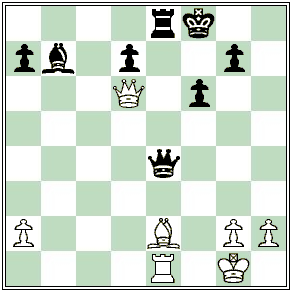
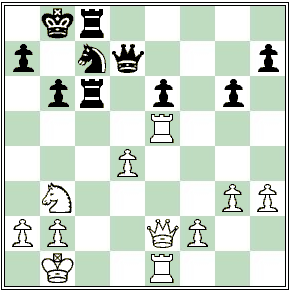
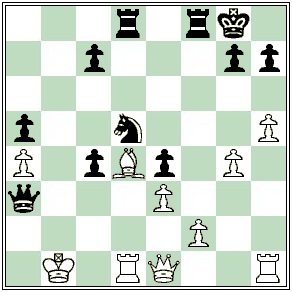
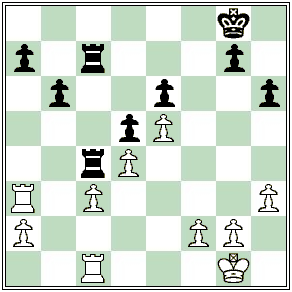
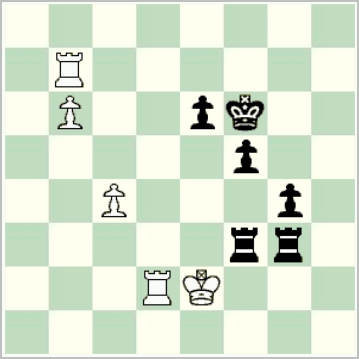
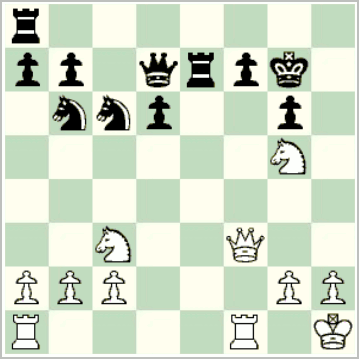
Update, August 2, 2026: The report has been updated with the round 2 results and available games, plus the round 3 draw. The second round produced the first significant shock, when Stephen Jessel blundered against Lukian Hushpit and lost. He had been better all along, and was trying to convert a pawn advantage in a major piece ending, though a draw seemed the likeliest result when the blunder occurred. (Click to replay.) Among the other top contenders, Adam Collins dropped half a point against Andrey Ivanov. This leaves eight players tied for the lead on 2/2, with another eight following half a point back.
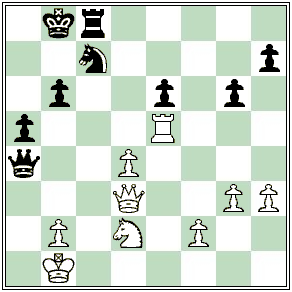
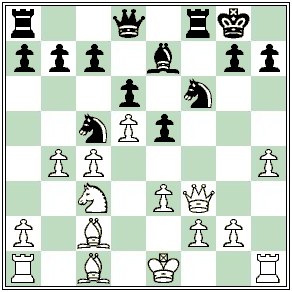
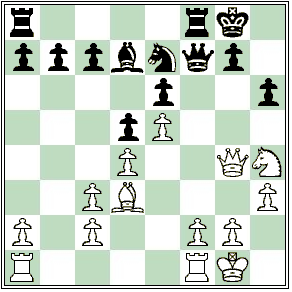
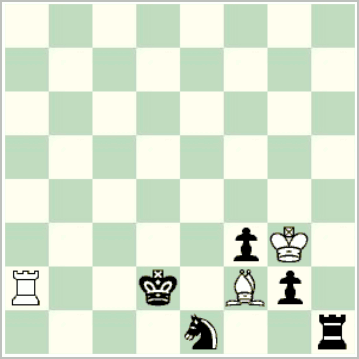
In the first round, Colm Daly had an uncomfortable time as White against Advaith Nichenametla V. He was markedly worse out of the opening, possibly lost, but his opponent allowed simplifications too quickly, leading to a roughly even game. Possibly to mix things up, Colm complicated, but this could have backfired when he blundered on move 41. With plenty of time after the time control’s added 30 minutes, his opponent missed the chance. (Click to replay.)
Update, August 3, 2026: The report has been updated with the round 3 results and games, and the round 4 draw. In the third round, Jacob Flynn won an interesting game as Black against Shane Melaugh, while Anuar Tureshbayev won in emphatic style against Lukian Hushpit. Flynn and Tureshbayev are the only players on maximum points after the third round, and they are paired in round 4.
Elsewhere, Kavin Venkatesan dropped a half point against Oliver Barnes, and indeed had to hold a pawn-down ending, and Adam Collins dropped a second half point. In a dramatic game, Colm Daly looked as if he was winning against Oisín O’Cuilleanáin, but somehow ended up losing.
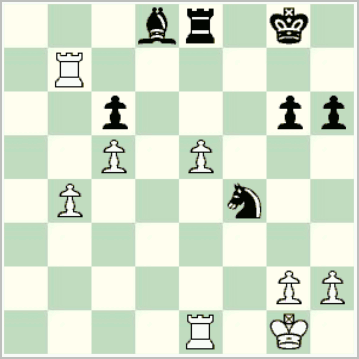
Update, August 4, 2026: In round 4, Anuar Tureshbayev and Jacob Flynn had a steady draw on top board. On the next board, there was a dramatic struggle between Joe Ryan and Kavin Venkatesan. Ryan’s enterprising sacrifice of a piece for three pawns led to a winning position, but he erred and allowed a devastating counter-strike, and lost. The game between Benjamin Murray and Stephen Jessel produced one of the most dramatic reversals of fortune I have ever seen in an Irish championship. Murray won a pawn and steadily increased his advantage throughout, reaching an engine edge of about +4. Somehow, almost out of nowhere, Jessel developed counterplay with two advanced connected passed pawns. Murray failed to appreciate the danger, and slipped into a lost position.
After this dramatic round, Flynn and Tureshbayev were joined in the lead by Venkatesan and Oisín O’Cuilleanáin on 3½/4, followed by six players on 3 and another dozen on 2½.
Update, August 5, 2026: In round 5, Venkatesan and Flynn agreed a short draw on top board. Tureshbayev beat O’Cuilleanáin on the next board, to move into the sole lead on 4½/5. He is followed by four players half a point behind: Collins, Flynn, Jessel, and Venkatesan. Another eight players are grouped a further half a point back.
Tomorrow, Tureshbayev has Black against Collins, Flynn has White against Jessel, and Venkatesan has Black against Patryk Brozynski, in a repeat of last year’s championship playoff.
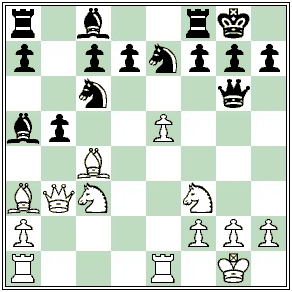
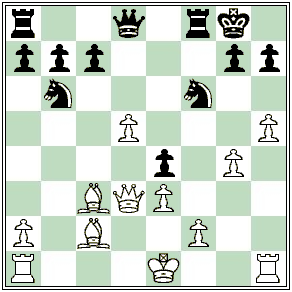
Update, August 6, 2026: The report has been updated with the round 6 games. On the top board, Adam Collins was better all game against Anuar Tureshbayev, but as he seemed about to clinch a crucial win, he slipped and allowed his opponent to escape with a startling draw. On the next board, Jacob Flynn similarly developed a large advantage against Stephen Jessel, though with almost all pieces still on the board, he had a difficult task finding a way to break through, and finally gave up and agreed a draw. In analysis afterwards, he seemed to think a win was there. On board 3, Patryk Brozynski and Kavin Venkatesan also drew, though the former had an opportunity for an early strike (14. Bxa6!) that would have given him a winning position. In an interesting game on board 4, Shane Melaugh had the misfortune to agree a draw in a winning position, though the win was certainly missable. On board 5, Joe Ryan built up a large advantage against Lukian Hushpit, but, as with the board 2 game, had a complicated task finding a breakthrough; he finally won.
This all leaves Tureshbayev still in the sole lead on 5/6, followed by six players half a point back: Collins, Flynn, Andrey Ivanov, Jessel, Ryan, and Venkatesan, and another five players a further half a point back.
Update, August 8, 2026: the report has been updated with the round 7 results and round 8 draw. With this late update, round 8 is approaching a (very dramatic) conclusion, so further descriptions of the action are postponed until the next update.
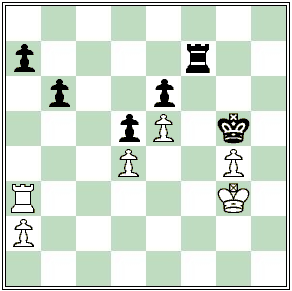
Update, August 8, 2026: the report has been updated with the round 8 results and the round 9 draw. Going into round 8, Anuar Tureshbayev stood clear first with 6/7, followed half a point behind by Adam Collins, Jacob Flynn, and Stephen Jessel. The eighth round pairings were Jessel – Tureshbayev and Collins – Flynn. The Collins – Flynn game turned into a tremendously complicated battle, in which Collins appeared to gain the upper hand, before Flynn unearthed a startling resource (36… Bg4!) to restore parity, before going astray in complications again, with Collins finally able to bring home the win. Meanwhile on board 1, Tureshbayev appeared to have defended steadily to reach a rook ending that seemed innocuous enough. But Jessel continued to press and create problems, and Tureshbayev gradually cracked, for Jessel to win.
Going into the last round, this leaves Collins and Jessel tied for the lead on 6½, followed by Tureshbayev and Oliver Barnes on 6, and paired accordingly in the last round. If Collins – Jessel draw, they will tie for first, and could be joined by either Tureshbayev or Barnes. Taking into account the tie-break rules, the possible tie-break outcomes would be:
Collins – Jessel draw, Tureshbayev – Barnes draw: rapid playoff between Collins and Jessel;
Collins – Jessel draw, Tureshbayev win: Jessel wins the title directly;
Collins – Jessel draw, Barnes win: rapid playoff between Collins and Jessel.
Thus neither Tureshbayev nor Barnes can become Irish champion this year, and we will see either a first title for Collins or a second for Jessel.
Update, August 17, 2026: the report has been updated with the final round and playoffs. In the final round, Collins made no real headway as White against Jessel, and perhaps even stood slightly worse when they agreed a relatively early draw. On the second board, Anuar Tureshbayev seemed to have gained a significant advantage out of the opening against Oliver Barnes, but the advantage soon dissipated and this game also ended in a draw. This left Collins and Jessel in a tie for first on 7/9. As they had drawn their individual game, the championship went for a second consecutive year, and for the third time in four years, to a two-game rapid playoff.
In the first game, Jessel, as White, built up a large advantage out of the opening, but he misplayed it at a crucial moment and slipped to a lost position, which Collins converted easily. In the second game, roles were reversed. Collins, taking almost no time and seemingly in preparation, built up a large advantage, but Jessel, short of time, found resources that led Collins astray, for a resounding victory to level the match.
The arbiter chose to continue the match with blitz games, at the rather short time control of 3 minutes with a 2 second increment. Jessel won the first game, but lost the second on time in a winning position, a very unfortunate outcome. The final Armageddon game, with Jessel as Black having draw odds, was an up-or-down affair in which Jessel made the final error, giving Adam Collins a win and his first Irish title. Congratulations!
This event was a strong candidate for the hardest-fought Irish championship ever, and Stephen Jessel can count himself unfortunate not to win; there was essentially nothing between the two over the course of the event.